Your confinement shopping list: what to buy, how much, and where to find it in the UK
A month's worth of dried goods, fresh food and kitchen kit for 坐月, with suggested quantities, where to buy each item in the UK, and when to start.
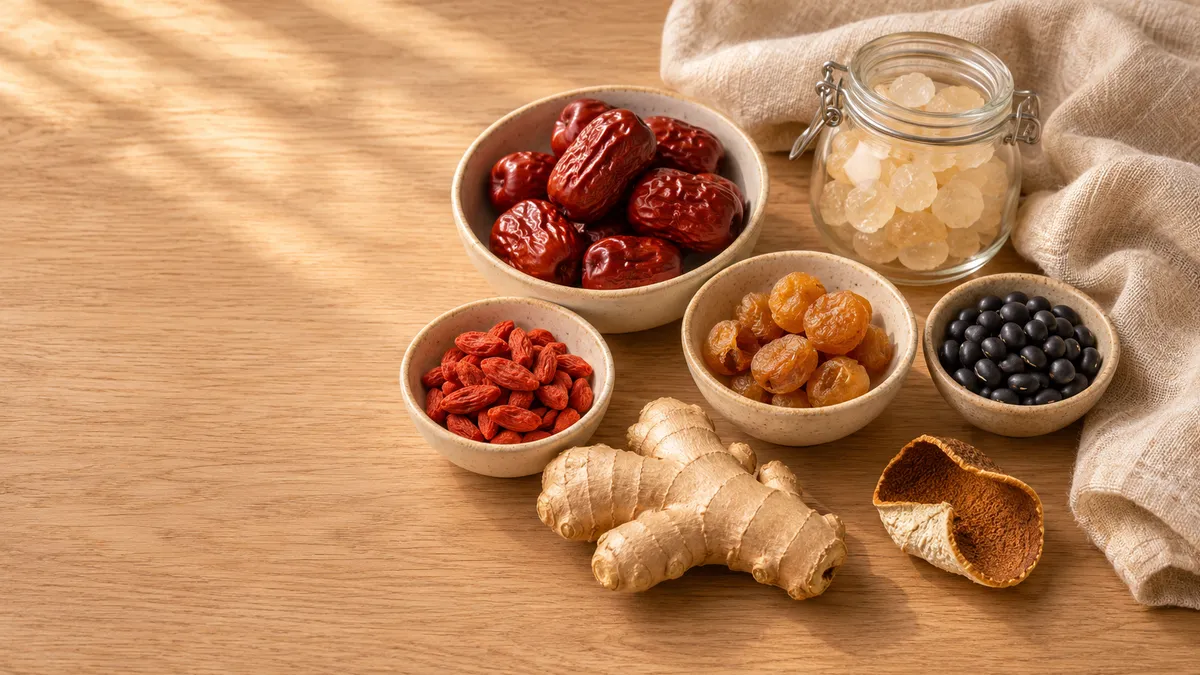
The first weeks with a newborn leave little time for shopping trips to Chinatown. Buy the dried ingredients, the long-keeping bottles and the kitchen kit before the baby arrives, and the confinement month (坐月) only needs top-ups of fresh food.
This list covers one mother for four weeks, eating a soup most days, a pot of red date tea most days, and one or two pots of ginger vinegar. If the rest of the family eats the same food, scale it up. Every recipe linked here is in our confinement recipes. For pads, nappies and the rest, see what to buy for your recovery and your newborn.
When to start
- 6 to 8 weeks before the due date: buy the dried goods and bottles. They keep for months, and it spreads the cost.
- 3 to 4 weeks before: buy the kitchen kit, clear space in the freezer, and toast a batch of rice for toasted rice tea. Many families also start the ginger vinegar base around now, because it's thought to taste better after a few reboils.
- 1 to 2 weeks before: cook and freeze a few soups in single portions.
- After the birth: buy fresh meat, fish and vegetables every few days, or have them delivered.
Dried goods
These keep for months in airtight jars somewhere cool and dry.
| Item | How much for 4 weeks | Where to buy |
|---|---|---|
| Red dates (紅棗) | 1 to 1.5kg | Chinese supermarkets; some large supermarkets |
| Goji berries (杞子) | 250g | Chinese supermarkets, large supermarkets, health food shops |
| Dried longan flesh (桂圓肉) | 200 to 250g | Chinese supermarkets |
| Dried tangerine peel (陳皮) | 1 small pack (about 10 to 15 pieces) | Chinese supermarkets |
| Black beans (黑豆) | 250 to 500g | Chinese supermarkets |
| Raw peanuts with red skins | 250g | Chinese supermarkets |
| Black-eyed beans (眉豆) | 250g | Chinese supermarkets, large supermarkets |
| Adzuki beans (紅豆) | 500g | Chinese supermarkets, large supermarkets |
| Black sesame seeds | 250g | Chinese supermarkets |
| Glutinous rice flour (糯米粉) | 1 pack (about 400 to 500g) | Chinese supermarkets |
| Dried shiitake mushrooms (冬菇) | 100g | Chinese supermarkets, large supermarkets |
| Dried wood ear fungus (木耳) | 50g | Chinese supermarkets |
| Dried fish maw (花膠) | 150 to 200g, optional | Chinese supermarkets, dried seafood shops |
| Long-grain or jasmine rice, for toasting | 600g (two batches) | Any supermarket |
- Red dates go into almost every soup and the daily tea, so they're the item people most often run out of. Pick plump, glossy ones with no white powder or mould.
- Fish maw is expensive and entirely optional. A small amount of a cheaper grade is fine for home soups.
- Check the best-before dates on dried goods, and store opened packs in sealed jars. Dried fruit and nuts can go mouldy in a damp kitchen.
Herbs from a Chinese herbal shop
Some families add codonopsis root (黨參), astragalus root (北芪) or angelica root (當歸) to soups, and some save ginseng for later in the month. These are herbal medicines rather than everyday food, so ask your GP, midwife or pharmacist before you use them, especially if you're bleeding heavily, breastfeeding or taking any medicines. Angelica root is traditionally left until the bleeding after birth (lochia) has stopped. Buy herbs only from a shop you trust, and don't use more than the shop or a qualified practitioner suggests.
Bottles and seasonings
| Item | How much for 4 weeks | Where to buy |
|---|---|---|
| Sweet black rice vinegar (甜醋) | 3 bottles per pot of ginger vinegar; 3 to 6 bottles in total | Chinese supermarkets |
| Sesame oil, or black sesame oil (黑麻油) | 1 bottle (300 to 500ml) | Chinese supermarkets; sesame oil in large supermarkets |
| Chinese rice wine (糯米酒 or 黃酒) | 1 bottle, optional | Chinese supermarkets; Shaoxing wine in large supermarkets |
| Chinese brown sugar slab (片糖) | 1 pack (about 400 to 500g) | Chinese supermarkets |
| Rock sugar (冰糖) | 1 pack (about 400g) | Chinese supermarkets |
| Light soy sauce | 1 bottle | Any supermarket |
- Sweet black vinegar is sold under several brands. Buy the sweetened kind made for 豬腳薑, not plain black vinegar.
- Rice wine contains alcohol, and cooking doesn't remove all of it. If you're breastfeeding, read our guide to ginger vinegar and chicken in rice wine before you buy, and consider a small bottle.
Fresh and frozen food
Buy these a few days at a time, or freeze in portions.
| Item | Roughly how much a week | Where to buy |
|---|---|---|
| Mature ginger (老薑) | 500g a week, plus 1.2kg for each pot of ginger vinegar | Chinese supermarkets: look for knobbly roots with dry, darker skin |
| Chicken, whole or thighs | 2 to 3 chickens, or the same weight in thighs | Any supermarket or butcher |
| Silkie chicken (烏雞) | 1, optional | Frozen at Chinese supermarkets |
| Pork bones, ribs or lean pork, for soup | 1 to 1.5kg | Butchers, Chinese supermarkets |
| Pork trotters or knuckle | 1.2kg for each pot of ginger vinegar | Chinese supermarket butchers, or order from a butcher |
| Pork liver (豬膶) | 200g, once a week at most | Chinese supermarkets, butchers |
| White fish (sea bass, sea bream, grass carp tail) | 1 to 2 fish, or 500g pieces | Fishmongers, supermarket fish counters, Chinese supermarkets |
| Eggs | 1 to 1½ dozen (8 go into each pot of ginger vinegar) | Any supermarket |
| Papaya, for papaya fish soup | 1 | Large supermarkets, Asian grocers |
| Lotus root, sweetcorn, carrots, sweet potato | For 1 or 2 soups | Chinese supermarkets; vacuum-packed lotus root keeps longer |
| Leafy greens (choy sum, 芥蘭, pak choi, spinach) | Enough for one side dish a day | Any supermarket, Chinese supermarkets |
- Liver: the NHS says that liver is very rich in vitamin A and advises having it no more than once a week. Avoid it altogether if you might be pregnant again.
- Oily fish: if you add salmon, mackerel or sardines to the week, the NHS advises no more than 2 portions of oily fish a week while breastfeeding.
- Pork trotters often need ordering a few days ahead. Ask the butcher to chop them into chunks.
Kitchen kit
| Item | Why |
|---|---|
| A large stainless steel or enamel stockpot (8 litres or more), or a clay pot (瓦煲) | For soups and ginger vinegar. Vinegar is acidic, so avoid aluminium and bare cast iron. |
| A slow cooker (3.5 to 6 litres) | Soups can simmer safely while everyone sleeps or feeds. |
| A double-boiling pot (燉盅) or steamer | For double-boiled soups, steamed fish and steamed eggs. |
| A vacuum flask (about 1 litre) | Keeps red date tea or toasted rice tea warm all day, near where you feed. |
| Freezer containers or bags, and labels | For single portions of soup, with the dish name and date. |
| A fridge thermometer | The Food Standards Agency says to keep the fridge at 0 to 5°C. |
| Airtight jars | For opened dried goods. |
Where to shop in the UK
- Chinese supermarkets sell nearly everything on this list. The big chains have branches in several cities, and many towns have a smaller Chinese or Asian grocer. Most of the large ones also deliver nationwide.
- Online Asian grocers deliver dried goods, bottles and frozen food, which is the easiest option once the baby has arrived. Order dried goods early, because delivery can take a few days.
- Large supermarkets' world foods aisles stock goji berries, sesame oil, Shaoxing wine, rice and some dried mushrooms. They're fine for top-ups.
- Chinese herbal shops sell dried herbs by weight. See the note on herbs above.
- Local butchers and fishmongers will often chop trotters, bones and fish for you if you ask.
Batch cooking and keeping food safe
Confinement food is usually made in big pots, so a few habits keep it safe. The Food Standards Agency advises:
- Cool cooked food quickly and get it into the fridge or freezer within 1 to 2 hours. Splitting a big pot into smaller containers helps it cool faster.
- Eat fridge leftovers within 2 days, or freeze them.
- Defrost frozen soup in the fridge, then reheat until it's steaming hot all the way through. Reheat food only once.
Sources
Disclaimer
- Our articles are general information only. They are not medical, legal or other professional advice, and they don’t replace advice from your midwife, health visitor, GP or another qualified professional who knows your situation.
- Postnatal Link is not a healthcare provider. Carers on Postnatal Link offer practical postnatal support; they don’t replace your NHS midwife, health visitor or GP.
- We check articles against NHS and other official UK sources at the time of writing, but guidance changes. Check the latest advice, and never ignore professional advice or delay getting help because of something you read here.
- Traditional confinement practices and foods are described as cultural information, not as health claims.
- Links to other websites are provided for information; we aren’t responsible for their content.
- In an emergency call 999. For urgent medical advice call NHS 111 or go to 111.nhs.uk.
Keep reading
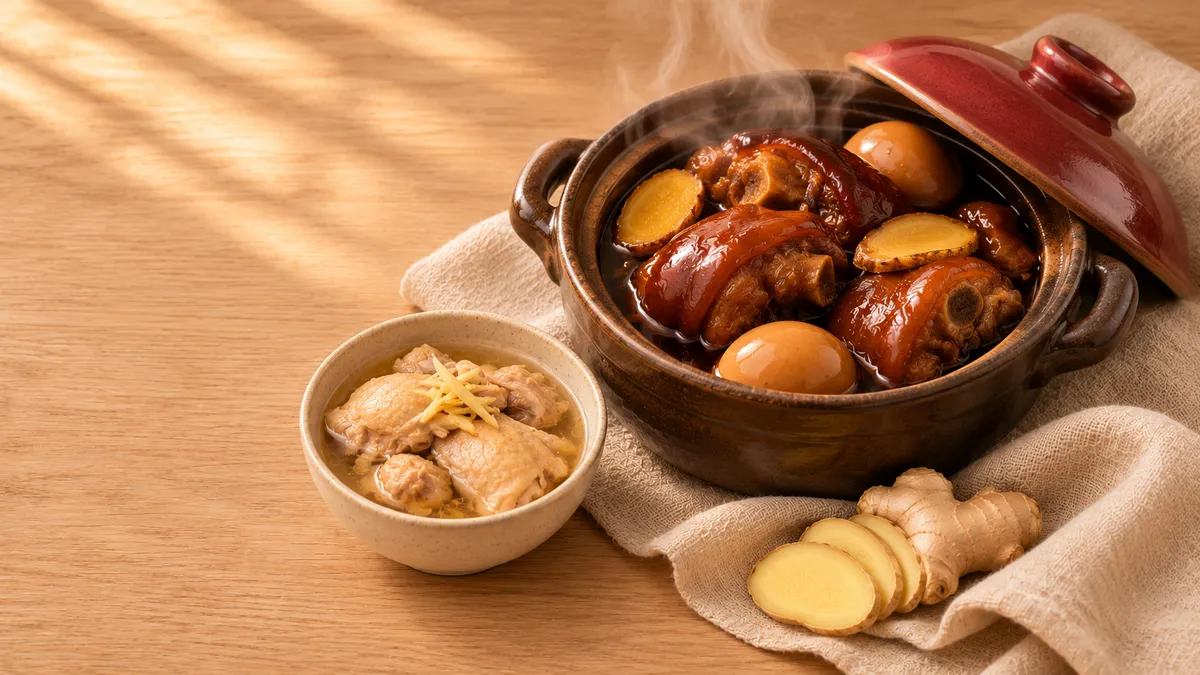
Ginger vinegar and chicken in rice wine: the confinement classics, and how to enjoy them safely
Why 薑醋 and 雞酒 are at the heart of the confinement month, how they're made, and what to know about sugar, alcohol, breastfeeding and keeping leftovers safe.
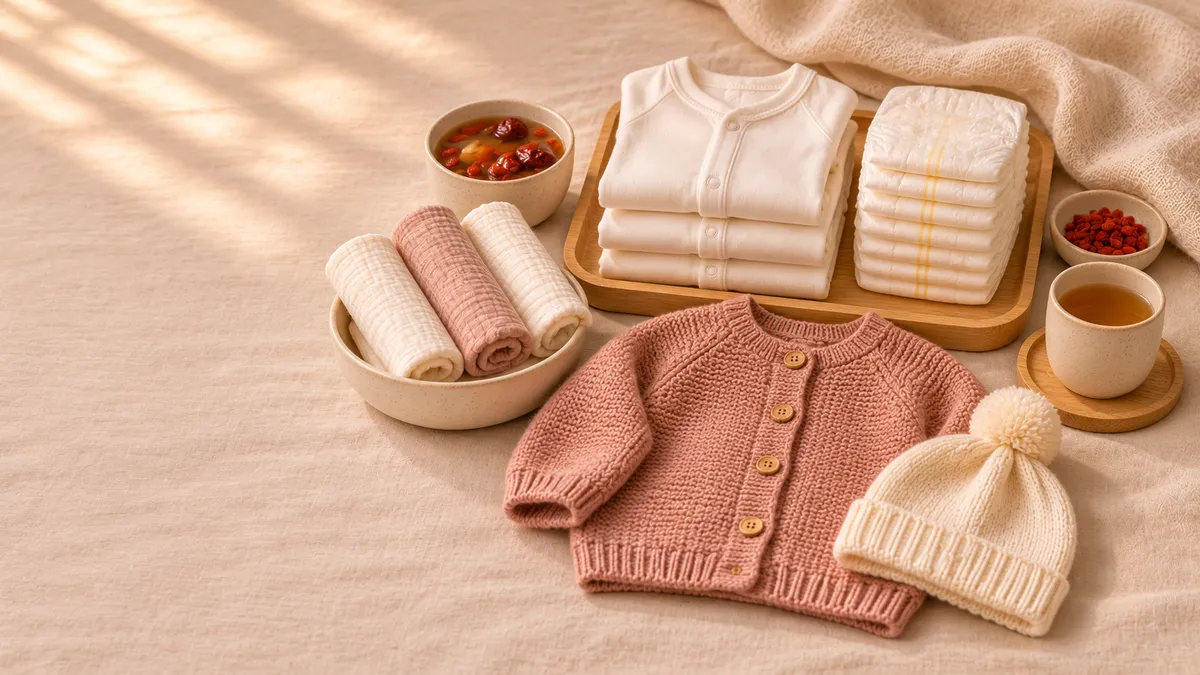
What to buy for your recovery and your newborn: a UK checklist with quantities
Maternity pads, nursing bras, nappies, sleepsuits, a car seat and the rest: what you need for the first six weeks, how many, where to buy them in the UK, and what you can skip.

Your baby's first year in the UK: checks, health visitor visits and vaccinations
What happens and when, from the newborn checks and the heel prick test to the health visitor's visits, the 6 to 8 week check, the NHS vaccination schedule and the 1-year review, plus the paperwork to do.